Standards-Compliant Web Design

Standards-Compliant Web Design

What does Standards-compliant mean to you and your business? A lot. It means lower costs, reduced production time, and increased accessibility. Your site will work better, and reach more people—not only in today's browsers, screen readers, and wireless devices, but in tomorrow's, next year's, and beyond. Find out more…

Custom Web Applications

Custom Web Applications

Build a custom piece of software, in a sense, that we can continue to customize and add features to as their business changes and expands. Find out how a web application could benefit your business.

Graphic Design

Graphic Design

Our original expertise began with more traditional design for print graphics like brochures, business cards, corporate identity (logo design), signage, trade show graphics, and other forms of marketing collateral. Although today it's a much smaller part of our business, we still have many clients that rely on us for these services every day.

Top 5 Skills For A Web Designer

web designer must have both creative and analytical thinking skills, like many other tech-related professions. Web design is one of the most in-demand IT jobs for its versatility. With companies increasingly focusing on user-friendly websites, web designers who can create dynamic, innovative, and sophisticated websites are sought after by employers. When you find exactly what you like to do in a creative field, web design is a flexible profession that offers many options to narrow your focus or change your route. 

Which skills are necessary for success as a web designer? In this article, we’ll go over both the hard talents that will help you stand out from the competition and the fundamental abilities you need to have to be hired as a web designer.

The top 5 skills to become a successful web designer are: 

  1. Knowledge of Design Tools/Principles
  2. Web Server Management
  3. Programming Languages 
  4. Typography & Composition 
  5. Content Management System 

Let’s explore each of these skills in detail. 

Knowledge of Design Tools/Principles

Employees working according to design standards

Understanding the basic tools and principles of design is the first skill that you must learn to become a web designer. These are the main platforms you can use to create a successful website. However, you must be careful to employ proper tools at appropriate times. For example, Adobe Illustrator will prove to be more beneficial in graphic design even though Photoshop is a superb tool for image processing. You will become comfortable with the complete design canvas once you are well-versed with such subtleties.

The concepts of visual design based on various human psychology principles form an integral part of web designing. These foundations are the cornerstone of both online and graphic design, and they should be understood properly to refine your web designing skills. These ideas can serve as a reference for creating print advertisements or portfolios. They include Emergence (focusing on the visual elements as a whole), Reification (using the essential object parts to distinguish it from others), and Invariance (highlighting some design parts to make it unique).

Web Server Management 

Two employees working on a project related to web server management

Web server management is a vital but often underappreciated skill for web designers, and most of them are not particularly good at it. A web server is a piece of hardware and software that responds to client requests sent across the World Wide Web using HTTP (Hypertext Transfer Protocol) and other protocols. A web server’s primary responsibility is to show website content by processing, storing, and distributing web pages to users.

Despite the fact that web servers aren’t strictly part of web design, being familiar with how they work will help you avoid downtime and find rapid, effective solutions to issues. Any web server management software must have comprehensive audit capabilities, file management, log file aggregation, and reporting. Additionally, the program ought to provide an intuitive single picture of everything occurring within the ecosystem.

Programming Languages 

An abstraction of Web Design

Some skills may be common for UI/UX Designers and Web Designers. One of the best web designer talents you may aspire to gain is a deep understanding of CSS (Cascading Style Sheets) and HTML (Hypertext Markup Language). The foundational building elements on which a website’s design and organization are created are HTML and CSS. You can use them as frequently as you like to read and edit a page. You can find a good job in web design by being proficient in these key languages.

Your employment prospects in web design can improve if you pick up a few other computer languages in addition to HTML and CSS. It would be an added advantage to master JavaScript, Python, Swift, and C++. If you can’t learn all the languages at once, pick JavaScript as it is the most popular one. Understanding these languages will set you apart right away.

Typography & Composition

Modern web features at a glance

Typography and composition are important aspects of web design and web development. Our understanding of concepts is shaped by typography. As a web designer, it’s crucial to understand how to effectively convey information through the use of proper typographic choices since the weight and geometry of a typeface express meaning.

New designers may struggle to decide which font to use due to the multitude of possibilities available. Body copy works well with practical fonts like Georgia, Verdana, and Roboto; embellishment should only be done with less practical typefaces. You can use various resources and tools to find the right combinations of fonts and styles. 

Web designers arrange text, images, and other materials both for aesthetic and practical reasons. Visual harmony, hierarchy, and structure of concepts are crucial for a design to be acceptable. Important content should be eye-catching and well-designed. By using contrast, empty space, and proportional parts, a well-composed layout achieves equilibrium. Be mindful of the design in the spaces around you, such as websites, paintings, movie sets, and billboards. As you understand and identify the strong composition, you can manifest it better in your design.

Content Management System

An abstraction of Content Management System

You must familiarize yourself with the essential Content Management System (CMS) features if you want to become a successful web designer. CMS is a software program that unifies the management of digital assets. Embedded visuals, video-audio files, and other programming routines are some of these assets. Your ability to create websites more effectively will surely increase if you are familiar with CMS. 

A Content Management System simplifies the process for information that needs frequent updating, such as blog entries, product descriptions, or events. It will be considerably simpler to manage content if you use a CMS to link relevant data and adjust layouts. You can build the material you require using Webflow’s built-in CMS capability, which contains templates.   

Final Thoughts 

If you want to be an accomplished web designer and grow in this field, attaining the right skills and experience can help. You can gain the requisite knowledge by studying the basics in a professional program. 

contact-us now to know your eligibility. 
7 Ways to Improve Your Website Homepage


Your website is your virtual place of business. Just like your regular place of business, you want it to be neat, clean, attractive, inviting and professional looking.

Here are 7 low cost ways to improve a homepage to meet today’s standards — and they may be easier than you think.

1. Freshen the Content Regularly

Just yesterday I saw a restaurant website highlighting its Thanksgiving menu — and it’s January! That restaurant had a great idea to add a special seasonal menu to the front page. However, they didn’t execute well, and let it stay up too long. Schedule a monthly reminder to check your website and update the content on the homepage.

2. Make Sure It Has a Call to Action

Ask yourself: what’s the top action you want visitors to your website to take?  Here are three examples of common calls to action:

  • Sign up for your email list – When people sign up for your email list, you create an ongoing connection allowing you to market to them. Most email marketing software (e.g.,  MailChimp(Link is external) which is free for small lists, or Constant Contact(Link is external)) offer an easy way to insert a signup box.
  • Shop in your e-Commerce store – If you sell products online, either embed pictures of a few products on your homepage to entice buyers to click through, or add a prominent “Shop Now” button.
  • Fill out a lead form – If you sell services instead of products, encourage visitors to fill out what’s called a lead form. It captures contact information so you can follow up.

3. Add Contact Information Prominently

Examine your homepage objectively. Are you making visitors hunt or guess to figure out how to reach you?

Many small businesses add contact information in the header or footer of every page. At a minimum, include an email address and phone number. If you receive customers at your location, add your address. If you’d rather use a separate “Contact” page, add a large prominent link to your Contact page.

4. Add Images and/or Video

Look at your home page. Is it text heavy? Images break up big blocks of text — and they are more inviting to visitors. Include at least one photograph showing your business, team or products. If no one in-house is a competent photographer, invest in professional photography. In most locales you can hire a professional photographer at rates starting at a few hundred dollars.

Videos are also excellent. So create a how-to video or one demonstrating your product, or of you welcoming visitors. Load it on YouTube or another video platform. Then embed the code to put it on your site.

5. Update Your Design to Current Standards

A website designed in 2005 will look dated compared with one designed in 2015. An outdated web design gives the impression your business is not up to date, either. It’s best to update the whole website. But if time and money are in short supply, at least redesign the homepage to create a great first impression. Update other pages later as time and money permits.

Contact your Web developer and ask for a homepage facelift. Or if you are a do-it-yourselfer, purchase a low-cost template — you can buy a professionally designed template for under $100 from places like  ThemeForest(Link is external) or  TemplateMonster(Link is external).

6. Improve Page Speed

If your home page loads slowly, visitors may never go beyond it. And very slow pages can even negatively affect rankings in search engines. Take the speed test here(Link is external). The best part: you’ll get suggestions for how to improve the speed.

7. Make it Mobile Responsive

Last but certainly not least, today’s websites need to be viewable on mobile devices. This is especially true for local businesses where customers may be searching on a smartphone from their car for a business nearby. A website that is not set up for mobile devices can be negatively downgraded in search engine results. If you give your site a facelift, make sure the new design is “responsive,” meaning it is responsive enough to adjust to mobile devices. The same goes if you purchase a template. 

10 Benefits of Hiring a Professional Web Design Company

1. A Better Understanding of the Industry

Having a robust online presence is necessary for your business. Your website occupies centre stage in enhancing your brand equity. However, it is equally crucial to understand the industry to create strategies for your website. It will help you to have an engaging website that can improve conversions.

Deploying a professional web designer can help you design a world-class website that will also cater to your objectives. The service providers will have immense experience creating similar websites in your industry and suggest the best workflows based on your business goals. In addition, they can help you to have a website with next-gen features that you can scale up.

2. You Save Your Time

It is crucial to have a quick turnaround on your new website design. It also takes time to finalise the design based on the workflows you have on your website. If it takes too much time to develop a new website, you will lose visitors and conversions. Are you sure you would dedicate in-house resources to this project? 

By deputing expert web designers, you can ensure that you will have an optimised website with the features you need to stay ahead of the competition. Professional web developers can implement a perfectly designed website within the shortest time possible. In addition, it will help you tap your audience faster and allocate resources where they are needed the most.

3. Come Up with Better Designs

You must have an elegant website that can ensure visitors stay longer on your website. It will also help you garner SEO brownie points. A professional web designer can use their prior experience and provide you with several designs based on the workflows for your website. These designs will also cover the latest website designing best practices.

4. Having a Responsive and Reliable Web Design

A vast majority of your audience will try to access your website over their smartphones. Therefore, your website must be responsive and ensure that the visitors have a seamless experience across all devices. A professional web designer can ensure that the website is responsive and can cater to all audiences over any device.

It is equally essential that your website is free from any flaws. Else, it could take up sufficient time to rectify them. A professional designer will undertake testing best practices can ensure that the site is free from errors before you can go live. They can also provide ongoing website maintenance and support services on an ongoing basis.

5. It will have Adequate Trust Factors

The website must have adequate trust factors that can ensure the reputation of your website. Professionals will take care to incorporate these features at the correct places across the site. The website must have trust factors at the right places that can enthuse trust in the visitors’ minds. 

The website must also load fast and have the right content. Apart from moving to an HTTPS platform, it must also have the Trust Seal in the checkout pages. The website must have the required policies at the right places on the website. Visitors must find it easy to connect with your business and place the contact information at suitable locations on the website.

6. Have an SEO-Friendly Website

Your website must adhere to SEO best practices to ensure they rank higher during a keyword search. The web designer must be aware of the various aspects related to SEO when designing the website. It will help search engine crawlers to crawl the website without errors.

If you are using the Drupal CMS, the developers can utilise the specific modules that can help in the SEO of the website. It will ensure that the homepage readily comes up during keyword searches. It will also help in increasing the eyeball share of your brand and improve visitors to the website.

7. Adapt the New Technologies

Your website must break the clutter, and one of the ways to do this is to adopt new technologies. A professional web designer will be aware of the website features usually associated with a particular industry. Having the latest features can increase website visitors and increase the dwell time on the website. Both these aspects can help to improve SEO for the site too.

A trendy website can also improve the visitor experience on the website. You can also utilise these features to understand the behavioural patterns of the visitors and make suitable changes to the workflows or the website content. 

8. Take Benefit of Continuous Support

Are you aware that your website will require expert attention on an ongoing basis? There could be various factors that could need monitoring on an ongoing basis. It is the reason why all web designers have a maintenance and support plan for their clients. They can help you with ongoing maintenance, bug fixes and customisation support.

You can have continuous technical support and make suitable changes based on industry needs or incorporate any changes you have seen in your peer websites. In addition, you can take the help of the experts to suggest any new features you wish to add to the website. It is also necessary that you check the support capabilities of the web design company before finalising with them.

9. You Interact with an Experienced Team

When you use the services of web design company professionals, they can easily understand your business goals and suggest suitable workflows for your website. In addition, they can utilise their prior experience and present a design that will work well for your business.

They will also allocate a dedicated team, and experienced project managers will interact with you. Working with professionals will also ensure that you have frequent updates on the progress of the website. In addition, they will undertake website design best practices and will undertake discussions with your team before critical milestones.

10. It Keeps you Ahead of the Competition

You must devise ways to increase brand awareness if you look forward to growing your business. One of the ways to do this is to break the clutter and have perfectly designed workflows on your website. The features on the website must be such that it showcases thought leadership. 

A professional web designer can ensure that your website does not have features that make visitors abandon your website. A properly designed website can increase visitors to the website and can even draw visitors from your competition. The website must delight your customers and instil loyalty in them.

What does a Web Development Firm Do?

In the current fast-pacing tech-savvy world, every business needs to have a website/ mobile application to enhance its market reach and build more connections. Having websites and apps offers extensive reach along with enhanced visibility. As we all know, everyone nowadays owns a website and maybe an app too, but that’s not a big deal. Maintaining quality and regularly shared updates is the essence of visitor engagement. 

Many new entrepreneurs go on designing and developing their websites and apps but can’t comply with desired results, and that’s when a web development firm comes in handy. Having a website development firm at your disposal will have a noticeable difference in increased brand value and growing business reach.  

Enterprises outsource to a web development company that manages all their “online” side of the business. Such agencies consist of various professionals, including managers, software engineers, web designers, coders, marketing teams, and more. They will work with clients to design and build websites and apps to elevate their business/ services/ products.

What Does a Web Development Company Do?

A web development company’s prime scope of work ranges from ideation – and designing, to creation. In addition, building websites along with mobile and desktop apps is also done by the web development agency.

Here are some of the tasks done by a web development company:

Web Development Services:

If you are looking forward to having a custom-built website and all your desired features, consulting with a website development firm would be the smartest choice for growing your business. Every business comes with a unique set of requirements. For that, a customized approach is needed, which comes under the web development services. According to your business type and industry, you will need specific types of marketing strategies. In order to boost your business, you will need a web development firm that will help you to do that.

App Development Services:

Various studies indicate that most users spend 2 out of 3 minutes scrolling through their smartphones. Everyone these days uses mobile applications to manage day-to-day tasks. It is among the prime reasons for having a mobile application to grow your business and reach more users. To do that, one needs to hire a website development firm that deals with app development services. They can easily handle everything, from choosing a platform to app budgeting and maintenance.

How to Select a Web Development Agency?

Before selecting the best web application development company, a few crucial details need your attention. Details such as:

  • Before selecting the firm, be sure to check their work portfolio. It will help you evaluate the usability and functionality of their projects and skills. You can even check out the company’s profile on leading networks such as GitHub, Dribbble, Behance, Etc. 
  • Along with the portfolio, you also need to look at their overall digital presence. Explore the company’s website, content, and social media profiles on various platforms. Keep a keen eye on their website design and publishing content – that will help you determine whether they are amongst the leading web development service providers or not. 

When you do not have technical expertise on your end, collaborating with the right web app development company would surely deliver the best results. Finding an experienced and reliable web development agency will help you to meet your business needs and let your business reach new milestones. Being one of the leading website design companies, The One Technologies offers a wide range of web design services. Partner with us and build your outstanding website today. Please fill up the form on the contact page, and our team will get back to you soon.

5 Benefits Of Hiring Professional Web Design Companies

If you’re looking for ways to boost your business and look more credible online, you might want to hire a professional web design company to manage your digital marketing needs. Businesses often need a credible website—one that will effectively get your message across to users, where they can relate to your company’s mission, voice, and services. 

You’ll want to make sure your design is the best it can be, where it’s highly searchable online and can attract the right audience. And, that’s exactly where a web design company comes in handy. Here are 5 reasons to work with a web designer in bringing your company front and center in the digital space.

Better SEO

When it comes to optimizing your website for search engines, like Google, there are quite a few factors that go into it, such as using specific keywords that are in high demand but with less competition amongst other users. And, these analytical details can be easier to understand with someone within the digital marketing field

So, by letting a web designer take control over the SEO and back-end work of your site, you’ll be more searchable online and be able to see greater results. The web design company can also help track analytics for you, if you’ve entered into an ongoing agreement.

A Unique Design

Nowadays it takes a lot for a website to stand out and show a unique, creative edge that goes beyond its competitors. Yet, with the help of a web design company, you can bring your company’s vision to life and use the images, graphics, text, sliders, and colors that you want to showcase. This way, you can go from a basic website that blends in online to one that really highlights your company’s personality and makes you look more professional to users.

Staying Up To Date On Current Trends

Things are constantly changing in the digital world in relation to tools, web design, and trends. Of course, if you’re in a different industry, you might not know about these adjustments. By hiring a web designer, you’ll get an inside look into what’s most popular and attractive to users, so you can better engage clients and draw in a wider audience. This way, you’ll stay relevant, effectively expressing your expertise in your industry and remaining on top of search engines.

Using The Newest Technology Available

Much like website design trends, technology is continually advancing, too, where new plug-ins, features, tools, and apps are being built each day to make your website and digital marketing needs even greater.

But, unless you’re in touch with these improvements, you won’t be able to reap those rewards and you’ll run the risk of falling behind of your competitors. Good news—a web designer will stay on track of what’s advancing and will implement accordingly.

A Great First Impression

Your website is your 24/7 ambassador. If people look you up online or go to purchase your services, your appearance will dictate how they feel about you.

So, if you have a sleek, sophisticated site that explains your business model and shows regular activity—perhaps by way of a content marketing strategy or blog—then it’ll make a longer-lasting and better first impression. Likewise, if a user visits your website and it looks outdated and it’s hard to read, it’ll be an instant turnoff and they won’t likely want to inquire further.

And a tip? If your website isn’t responsive, meaning it’s not accessible on mobile and tablet, for instance, it can hold you back from making connections due to the lack of functionality. A web designer can make sure your site is efficient in all relevant platforms.

Experimental Design in Chemistry: A Review of Pitfalls

Introduction

Getting the best information from chemical experimentation using design of experiments (DOE) is a concept that has been around for decades, although it is still painfully underused in chemistry. In a recent article Leardi1 pointed this out with an excellent tutorial on basic DOE for chemistry. The classic DOE text Statistics for Experimenters2 also used many chemical illustrations of DOE methodology. In my consulting practice, however, I have encountered numerous situations where ’vanilla‘ DOE – whether from a book, software, or a Six Sigma course – struggles mightily because of the inherent complications of chemistry.

The basic rationale for using a statistically based DOE in any science are straightforward. The DOE method provides:

  • Points distributed in a rational fashion throughout “experimental space”.
  • Noise reduction by averaging and application of efficient statistical tools.
  • ‘Synergy’, typically the result of the interactions of two or more factors – easily determined in a DOE.
  • An equation (model) that can then be used to predict further results and optimize the system.

All of these are provided in a typical DOE, which generally starts simply with a factorial design.

DOE works so well in most scientific disciplines because Mother Nature is kind. In general:

  • Most experiments can be performed with small numbers of ’well behaved‘ factors, typically simple numeric or qualitative at 2-3 levels
  • Interactions typically involve only 2 factors. Three level and higher interactions are ignored.
  • The experimental space is relatively smooth; there are no cliffs (e.g. phase changes).

As a result, additive models are a good fit to the space and can be determined by straightforward regression.

Y = B0 + B1×1 + B2×2 + B12x1x2 + B11×12 +…

In contrast, chemistry offers unique challenges to the team of experimenter and statistician. Chemistry is a science replete with nonlinearities, complex interactions, and nonquantitative factors and responses. Chemical experiments require more forethought and better planning than most DOE’s. Chemistry-specific elements must be considered.

Mixtures

Above all, chemists make mixtures of ‘stuff’. These may be catalysts, drugs, personal care items, petrochemicals, or others. A beginner trying to apply DOE to a mixture system may think to start with a conventional cubic factorial design. It soon becomes clear, however, that there is an impossible situation when the (+1, +1, +1) corner requires 100% of A and B and C! The actual experimental space of a mixture is a triangular simplex. This can be rotated into the plane to show a simplex design, and it can easily be extended to high dimensions such as a tetrahedron.

It is rare that a real mixture experiment will actually use 100% of the components as points. A real experiment with be constrained by upper and lower bounds, or by proportionality requirements. The active ingredients may also be tiny amounts in a solvent. The response to a mixture may be a function of the amount used (fertilizers or insecticides, for example). And the conditions of the process which the mixture is used in may also be important, as in baking a cake – or optimizing a pharmaceutical reaction. All of these will require special designs.

Fortunately, all of these simple and complex mixture designs have been extensively studied and are covered by Cornell3, Anderson et al4, and Design-Expert® software.

Kinetics

The goal of a kinetics study is an equation which describes the progress of the reaction. The fundamental reality of chemical kinetics is

Rate = f(concentrations, temperature).

However, the form of the equation is highly dependent on the details of the reaction mechanism! The very simplest reaction has the first-order form

Rate = k*C1

which is easily treated by regression. The next most complex reaction has the form

Rate = k*C1*C2

in which the critical factors are multiplied – no longer the additive form of a typical linear model. The complexity continues to increase with multistep reactions.

Catalysis studies are chemical kinetics taken to the highest degree of complication! In industry, catalysts are often improved over years or decades. This process frequently results in increasingly complex catalyst formulations with components which interact in increasingly complex ways. A basic catalyst may have as many as five active co-catalysts. We now find multiple 2-factor interactions pointing to 3-factor interactions. As the catalyst is further refined, the Law of Diminishing Returns sets in. As you get closer to the theoretical limit – any improvement disappears in the noise!

Chemicals are not Numbers

As we look at the actual chemicals which may appear as factors in our experiments, we often find numbers appearing as part of their names. Often the only difference among these molecules is the length of the chain (C-12, 14, 16, 18) and it is tempting to incorporate this as numeric levels of the factor. Actually, this is a qualitative factor; calling it numeric invites serious error! The correct description, now available in Design-Expert, is ’Discrete Numeric’.

The real message, however, is that the experimenters must never take off their ’chemist hat‘ when putting on a ’statistics hat’!


Reference Materials:

  1. Leardi, R., “Experimental design in chemistry: A tutorial.” Anal Chim Acta 2009, 652 (1-2), 161-72.
  2. Box, G. E. P.; Hunter, J. S.; Hunter, W. G., Statistics for Experimenters. 2nd ed.; Wiley-Interscience: Hoboken, NJ, 2005.
  3. Cornell, J. A., Experiments with Mixtures. 3rd ed.; John Wiley and Sons: New York, 2002.
  4. Anderson, M.J.; Whitcomb, P.J.; Bezener, M.A.; Formulation Simplified; Routledge: New York, 2018.

How to Choose a Web Design Company

Your online presence is more important than ever, so if your website is looking out of date it might be time for a website redesign. If you don’t already have a web design agency you’re happy with, how do you choose the right firm to help update your site?

Start with some reconnaissance work. Perform online searches to find web design companies in your area and ask professional peers for references. Start making a list of websites you like, whether they are in your industry or not, and find out who built each of your favorite sites.  

Once you have a short list of possible web design agencies, take the following steps to ensure you choose the right partner for your project.

  1. Research the company. The web design agency you choose to build your site will truly hold the future of your company in its hands, so it’s important to choose a company that is well-established, experienced, and trustworthy, with an excellent reputation and a demonstrated expertise in web design and related skills such as web development, SEO, and digital marketing. Visit the website for each prospective web design agency to see how long they’ve been in business, what services they provide, and what level of experience and specific skills their team members offer. Also check the website for customer testimonials or case studies, and read reviews on third-party sites such as Google, Facebook, Better Business Bureau, Yellow Pages, and Trustpilot.
  2. Check out the prospective agencies’ own website. Many web design firms will have a portfolio section on their website so you can easily see some examples of their work. Are the websites they’ve developed professional-looking and easy to use? Do their featured clients seem comparable to you in terms of size? Do the sites seem similar in scope? Do the sites have functionality you’ll require for your own site?
  3. Check out some of the websites they’ve built. Many web design firms will have a portfolio section on their website so you can easily see some examples of their work. Review these samples with the following questions in mind: Are the websites they’ve developed professional-looking and easy to use? Does their website design seem to span the gamut in terms of style, or do the sites look like they’ve been built from a template? Do their featured clients seem comparable to you in terms of size and scope? Do the sites have functionality you’ll require for your own site? Are there examples of websites in your industry?
  4. Make a list of must-haves for your website. Having a list of non-negotiables before you start talking to agencies will make the vetting process much easier, prevent you from forgetting any priorities during the sales process, and help you quickly narrow down your list of prospects to just the ones that check every box. In addition to basic requirements (i.e., WordPress experience, responsive design, ability to integrate with third-party systems, specific functionality such as online payments or registration, etc.), create a second wish list for things that aren’t deal-breakers but that might make you lean toward one agency over another (i.e., logo design, secure hosting, content creation, ongoing digital marketing, experience with print design, etc.).
  5. Know your timeline and budget. Having a firm idea of how much you can pay for a new website and when it must be completed is essential to finding the right web design partner. On the financial side, establish a cost range rather than a single number, and be sure to ask what is included in the project estimate and how/how much you will be charged for fees and services that are not included. Your timeline is another important consideration. If you have a hard deadline for the site launch, such as before a major industry event, product launch, or sales cycle, be sure to communicate that deadline to agency candidates and ask them for an honest assessment of whether they can meet the deadline, any challenges they anticipate with your timeline, and what they will do if they are running behind.
  6. Make an initial call to talk about your project and set up a meeting. Pay attention to how they handle this introductory call—are they accessible and friendly? Do they ask questions about your company and the details of the project, or do they immediately launch into a hard sell? This is a company you should evaluate as a long-term agency partner, so chemistry is important. While the person who answers the phone might not be the one you end up dealing with the most (or at all) once you have signed on as a client, that person still reflects the overall personality of the company, so be sure it feels like a good fit.

Finding a web design partner that is the right fit for your business and your brand does take some work, but the more due diligence you conduct before signing a contract, the more likely you’ll be happy with the agency relationship, the web design process, and the website they deliver when the project is complete.

Why web design is important and what makes it good?

When creating a website for your business or perhaps redesigning your website, you might be asking yourself why web design is important and what makes it good. How do you determine this, and how can you ensure that you cover all the essential website design principles?

The truth is that website design and development is about more than just looking pretty. It’s one of the most critical factors contributing to whether the user has a good or poor experience while browsing your site, directly influencing the overall impression of your brand.

We discuss why you should invest in a good web design and how it will continue to serve you for years to come.

Why is Web Design Important?

We’re not exaggerating when we say that web design can make or break your business. Don’t believe us? We’ll let the stats do the talking. 75% of consumers say that they make snap judgements of a company’s credibility based on their website design. 

If that on its own does not already convince you to consult an agency for professional website design, keep reading as we break down the many benefits of a good website and the downfalls of a bad one.

Importance of a Good Website for a Business

There are many benefits to having a sleek, beautiful, and easy-to-navigate website. Here are just a handful of the top benefits. 

Key Benefits of Having a Great Website Design

  • Gives a Good First Impression
  • Helps You Rank on Search Engines like Google
  • Makes You Seem Credible and Approachable 
  • Helps to Get Leads and Convert Sales
  • You Can Measure Up to Competitors
  • Gives You a Brand Personality 

What Makes a Good Website?

A successful website has all the ingredients, which reflects in the rewards, whether that’s leads, sales, or page views. Whichever metric you want to focus on, getting the web design right will help you achieve the goal. 

Good Website Design Principles

Online experiences are a window into your business so good website design is ultimately what gives your users the best experience possible with your brand but you can follow some common principles to ensure you start on the right track.

Here are the most important web design principles to pay attention to.

7 Important Website Design Principles 

Here are some of the elements that contribute to a good website design.

UI/UX and Website Layout Design 

Web page design and layout must not only look good, but it must also serve a purpose. 77% of agencies are of the opinion that a poor website user experience (UX) is a weakness for their clients. So even when they get the visual elements like colours and fonts right, they could be ruining all that hard work with a poor user experience!

You must, therefore, always go back to what the user will see and experience. What makes a great website is when they can easily navigate and get the information they are looking for. If it takes them too long or looks overwhelming, they will close the tab on your site. 

Our attention spans are especially short nowadays, so ensure that the most important information is front and centre for all to see.

Responsive Mobile Website Design

Think about how often you view content on your phone. How many websites have you opened on your mobile? We’ve all landed on a website where we had to try and scroll or pinch to make the content legible. It’s an unnecessary headache! 

Statistics suggest 85% of adults believe that a website must look just as good on their mobile than on their desktop. What does this mean for your website design? 

Well, you need to ensure that the display adjusts to the pixel width of the device you are viewing the website on – whether this is a desktop, smartphone, or iPad. Always check that your website is mobile responsive before you go live. 

Quality Content: Copy, Imagery and Videos 

One of the biggest mistakes businesses make is using images that are too large on their website. And this results in a painfully slow loading website and images that take forever to open. Research suggests that 39% of users will stop viewing your website if the images won’t load or are taking too long to load.

Even when you get the images right, you also want to consider adding video. Customers are ten times more likely to interact with a video than images, so why not take advantage of that? 

Copy is another element to a website that people do not pay enough attention to. When you have poorly written, jargon-littered copy, it will not impress your customers. It will make them yawn! Make copy part of the design, with snappy headlines, subheadlines, and short paragraphs that are straight to the point. Remember that readers will skim, not read in detail, so ensure that something catches their attention.

Call to Actions (CTAs)

What is the purpose of your website really? Yes, you want to give a credible, good first impression, but you also want them to take action! And to do this, you have to remind them and make it easy for them to do so with Call to Actions or CTAs. These are the Read More, Download Now, Contact Us, etc., buttons that you see throughout a website. 

SEO Traffic

A website that’s backed by a sound SEO strategy and has been structured to reflect this strategy, is enormously more like to bring in free, qualified traffic. You want your website to be found because it will give you the opportunity to connect with customers without needing to chase them. 

A website can be designed with SEO principles built into the foundation and it will prevent the need to return at a later date to invest in unnecessary restructuring and upgrades.

Credibility like Social Proof

There is so much fake news and low-quality brands out there. And, as a result, it can be a real struggle to filter through all of these to get to the cream of the crop (you). Once your potential customer lands on your site, you want to give them that extra push with social proof such as case studies, testimonials, etc.

Brand Identity and Consistency 

It’s shocking how many businesses do not have a Brand Guide outlining their selected brand colours, fonts, etc. If you’re one of them, your website is an excellent place to start! 

You need to ensure that what you have on your website is carried through on all other business channels, including social media. This brand consistency makes your business easily recognisable and contributes to its credibility. Get your Brand Guide and website done first, and everything else will follow naturally. 

What does a professional web design agency do?

professional web design agency is a company that specialises in creating and designing websites. Web design agencies typically have a team of web designers and developers who are responsible for creating and maintaining websites for their clients.

The main purpose of a web design agency is to help businesses create an online presence that is professional, engaging, and effective. A well-designed website can help a business attract new customers, increase sales, and improve its overall brand awareness.

What should I look for in a professional web design agency?

No matter what type of web design services you need, it’s important to find an agency that has a proven track record of designing and developing successful websites. Be sure to ask for examples of their work and read online reviews before making your final decision.

When looking for a web design agency, endeavour to find out about their process, experience, and portfolio. These are just some of the factors you should consider when choosing the right web design agency to help grow your business.

What benefits are there of working with a professional web design agency?

As your business grows, you may find that you need help creating or improving your website. A web design agency can be a valuable partner in helping you achieve your online goals. But with so many agencies to choose from, how do you know which one is right for you? Here are some things to look for when choosing a web design agency:

  1. Experience and expertise: When considering a web design agency, be sure to ask about their experience and expertise. Do they have a team of professionals with the skills and experience needed to create a high-quality website? Can they provide examples of their work?
  2. A proven track record: Choose an agency that has a proven track record of designing and developing successful websites. Ask for examples of their work and read online reviews to get a sense of their capabilities.
  3. A deep understanding of web design trends: An experienced web design agency will have a deep understanding of web design trends and how to use them to create an effective website for your business. Ask about their process and what kind of feedback they can provide during the development process.
  4. A commitment to your success: When you work with a web design agency, you should feel confident that they are committed to your success. Ask about their customer service policies and procedures to be sure you will have the support you need throughout the development process.
  5. A focus on your goals: Be sure to choose an agency that focuses on your specific goals for your website. If you need help with branding, for example, be sure to find an agency with experience in that area. If you need an eCommerce solution, find an agency that specialises in that type of development.

Making the decision to work with a web design agency is an important step for any business. Be sure to do your research and ask the right questions to find the best partner for your needs.

How does web design link with SEO?

Web design and SEO are two fields that are closely related. A well-designed website can have a positive impact on your SEO efforts, while a poorly designed website can actually harm your chances of ranking well in search engines.

There are a few key things to keep in mind when designing your website with SEO in mind:

1. Use keyword-rich titles and descriptions

Make sure your website includes titles and descriptions that contain the keywords you’re targeting. This will help search engines index your site correctly and help users find what they’re looking for.

2. Use clean, simple code

Search engines prefer websites that are coded using clean, simple code. If your website’s code is messy or complicated, it could hurt your chances of ranking well.

3. Optimise your images

Make sure to include keywords in your image file names and alt text. This will help search engines index your images correctly and help users find them when they’re searching for keywords related to your business.

4. Use relevant, keyword-rich anchor text

If you’re linking to other websites, make sure to use relevant, keyword-rich anchor text. This will help search engines understand what your website is about and improve your chances of ranking well for those keywords.

5. Avoid using Flash or Java/.NET

Flash and Java/.NET can complicate things for search engines, so it’s best to avoid using them if possible. If you must use them, make sure to include alternative text that contains your keywords so that search engines can still index your site properly.

By keeping these things in mind, you can help improve your website’s SEO and give yourself a better chance of ranking well in search engines.

Recap

Taking advantage of the expertise of a professional web design comes with an array of benefits. It will help you take your online presence, and business, to the next level by generating new leads, gaining increased visibility and reaching new audiences.

Working with a professional web design agency such as Lead Genera brings to you:

  • Access to a team of professionals with the skills and experience needed to create a high-quality website
  • A web design agency can help you save time and money by taking care of all the details involved in creating a website
  • An experienced web design agency that has a deep understanding of web design trends and how to use them to create an effective website for your business
  • A web design agency that will provide you with valuable insights and feedback during the website development process
  • Peace of mind knowing that your website is being created by experts who are committed to your success

5 Reasons Why To Choose Professional Web Design Company Over Freelancing

why-to-choose-professional-web-design-company-over-freelancing

If your business does not have an online presence, your business does not exist, hence, every business requires a website. But, web development is more than just graphics. Those graphics, color schemes should resonate your brand positioning too.

But where to get your company’s website developed?

And this is where the rigmarole starts!

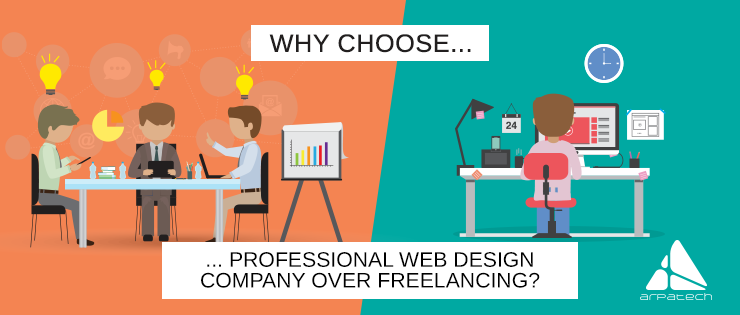
Web Design Company or a freelancer? It can be a long running debate and a very difficult choice to make. Web Design companies charge a whole lot of money and some major services cannot be found with a freelance contract.

Web Design Company VS Freelance Contract – Tough Decision!

A professional and an experienced web design company follows proper methods and strategies with the latest technology for developing your website. Web design companies with qualified designers can give you better services rather than a single web designer/freelancer.

Selecting a professional web design company over a solo freelancer completely depends on your business and your budget. A proper company can provide more options and solutions due to the diversity of their team. Freelancers can be quick and cheap but there is a high chance that they wouldn’t be able to fix all your issues and it can badly impact the quality of the work delivered.

Nonetheless, working with freelancers and web design companies both have their own pros and cons. It can be a tricky decision when it comes to choosing between the two. So we are sharing here five key reasons as to why choose professional Design Company over freelancers:

1: Specialization & the Services Offered

A web design company carries a whole team of geniuses with different and latest skill sets. They are each black belts in whatever they do. A web design company is very picky while selecting their employees.

A company with 3 designers is more efficient than a bunch of 3 freelancers. A freelancer can be cheap with the price but it’s highly unlikely that they can produce the kind of quality a web design agency can do. There is a certain hierarchy when it comes to web design companies.

vs

The whole team is an unmatched technological force responsible for building your web design. Whereas a freelancer can lack in some areas while designing.

A web design company is undoubtedly more capable of offering complete and satisfactory services with good quality than a freelancer though no matter how much he/she is experienced and skilled.

2: Who Can Better Utilize The Latest Technology?

The best and top Web Design companies do not take quality and testing lightly.

There is a set standard of quality development services in web design agencies whereas freelancers mostly rely on free resources and have to compromise on different things.

logos

A company works like a library while a freelancer is a book. A library can provide you millions of books on the same subject but a book can only give you limited topics to think on.

3: Communication and Meeting The Deadlines

There is a certain level of professionalism when it comes to working with a web firm. The whole web design team listens well and do accordingly to it and can also suggest you better solutions for your business.

web2

A freelance web designer is directly communicating with you and this can result in some misunderstandings or sometimes the freelancer might not be able to identify what exactly your needs are and can fail to give further solutions.

No one in the business wants to displease the clients. However, bad luck can strike anytime. Due to any issue, a single freelancer may not be able to complete the task in the given time and the worst part is, he/she don’t have any backups as they are solely responsible for completing your task. A company on the other hand always have a contingency plan if any mishap happens.

4: Who is more costly & What’s your Budget?

There is this perception that Web design agencies are always expensive in comparison to freelancers. Well, we can agree to disagree but this completely depends on what type of services you want.

web-design-cost

If you are looking for a normal kind of service than the budget can be low and cheap. But if you want the whole design to be built from scratch and there are some custom-made features that you want on your website, then you need to raise your budget as well.

5: Trust, Reliability, and Efficiency

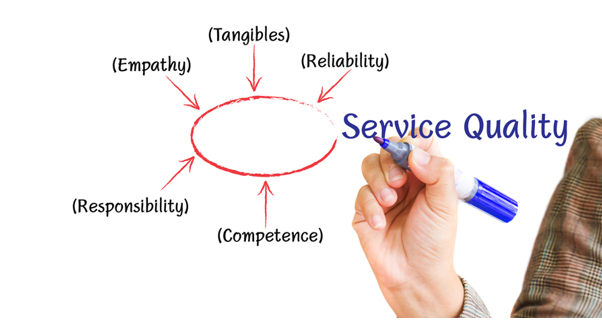
A company has long-term goals, so it strives hard to live up to their reputation. Whereas, most freelancers have temporary goals and take freelance work as a side job. The web design agency has a whole team to give up-to-date information about your work. They inform you on every stage and you can even ask them for updates on any step.

service

It’s very difficult to trust a freelancer in this aspect. Off course, they can be reliable and committed but sometimes they disappear in the mid-project and it can create sudden panic.

Working and executing the work is much better in a web design company rather than solo freelancers who works alone and have to cater multiple clients at once.

Web Design Company OR a Freelancer? Your call!

In a nutshell, no matter what type of web development services you are seeking, just make sure that you read reviews about the company or the freelancers you are choosing for the task. Moreover, it also relies on how much budget you have.

Do you require small changes in your current website? Maybe a freelancer might work. But, if you are looking for a complete package with strict deadlines, then a professional Web Design company might be a better option. A web design company is a one-stop shop for your business with a large, experienced team with long –term support.

It’s very tempting to hire freelancers on a cheap budget, but it can give you nightmares if they disappear into thin air in the middle of a project. But then again the decision lies with you, your current needs and your budget. So, choose wisely.